
If you are weighing IPTV vs cable in Canada, the short answer is that IPTV usually wins on price, flexibility, and channel choice, while cable still appeals to people who want a bundled bill from a single national provider. Streaming your channels over the internet has quietly become the default way Canadians watch live TV, sports, news, and movies, and the gap in monthly cost between the two is now hard to ignore. This guide breaks down cable vs IPTV across the things that actually matter to your household: what you pay, how many channels you get, whether you are locked into a contract, the equipment you need, picture quality, and who each option really suits.
By the end you will know whether IPTV or cable makes sense for your home, roughly how much you could save each month, and what to check before you switch. We keep it practical and Canada-focused, because the pricing and habits here are different from other markets.
IPTV vs cable: the quick verdict
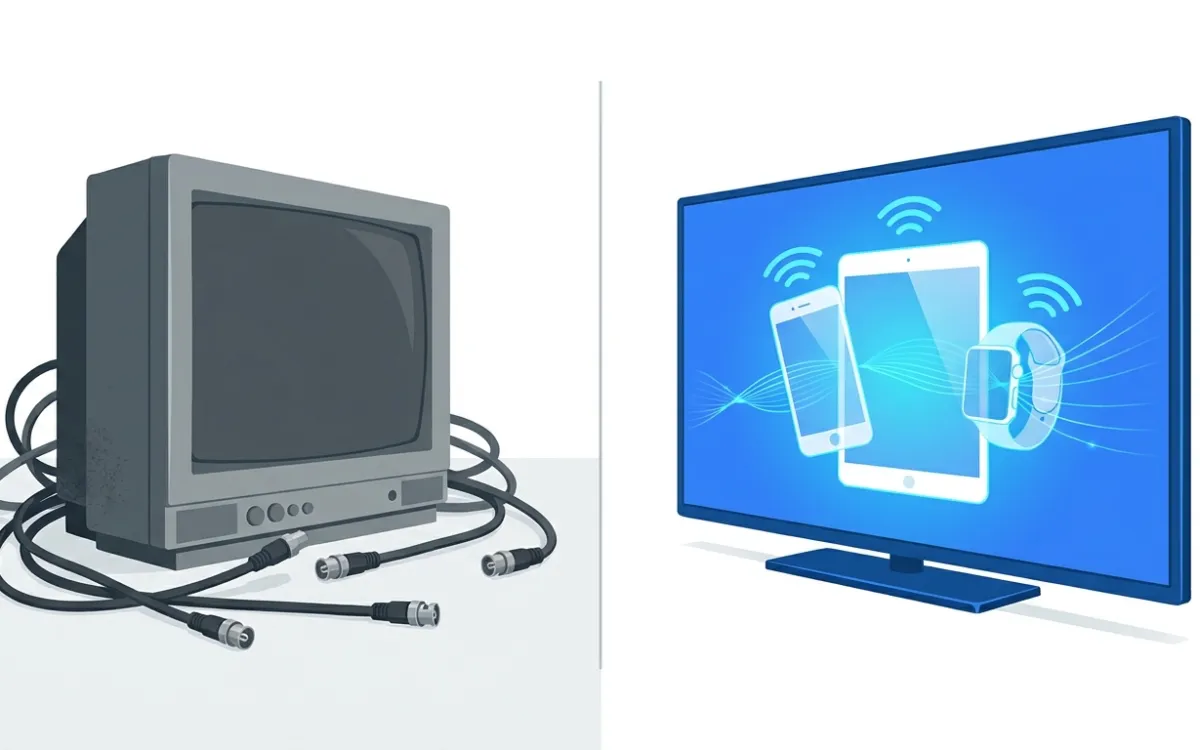
IPTV (internet protocol television) delivers live channels and on-demand content through your existing internet connection instead of a coaxial cable line or satellite dish. Traditional cable sends a fixed set of channels down a physical wire from a regional provider, usually on a fixed term with rented hardware.
For most Canadian households, IPTV is the better value: you get thousands of live channels, a large 4K on-demand library, and month to month billing with no contract, all for a fraction of a typical cable bundle. Cable still makes sense if you have zero interest in managing an app, want everything on one national bill, or live somewhere with slow or unreliable internet. Everyone else tends to come out ahead by switching. If you want to see how a switch works in practice, our guide on how to watch TV without cable in Canada walks through the whole process.
Cable vs IPTV: full comparison table
Here is the side by side view. These figures reflect typical Canadian pricing and the features of a modern IPTV service.
| Feature | Traditional Cable | IPTV |
|---|---|---|
| Typical monthly cost | Roughly 60 to 120 dollars once fees are added | Around 10 to 20 dollars per month |
| Live channels | Fixed bundle, usually 100 to 200 in your tier | Thousands of live channels across many countries |
| On-demand library | Limited, often pay per title | Large 4K on-demand library included |
| Contract | Often 1 to 2 year term with penalties | No contract, month to month |
| Equipment | Rented box and cabling, sometimes a dish | Devices you already own |
| Devices supported | Usually one TV per box | Smart TVs, streaming sticks, boxes, phones, tablets |
| Simultaneous streams | Extra boxes cost more | Up to 4 devices at once |
| Installation | Technician visit and appointment window | Self setup in minutes |
| Picture quality | HD standard, some 4K on premium tiers | HD and 4K where available |
| Internet needed | Not required for TV | Around 25 Mbps for smooth HD |
| Support | Business hours call centre | 24/7 support |
Price: the real monthly savings
Price is where the cable vs IPTV debate is usually decided. A cable package in Canada often starts in the 60 dollar range and climbs past 100 dollars once you add the channels people actually want, plus box rental, network fees, and taxes. Add a premium sports or movie tier and many households pay well over 120 dollars a month.
A modern IPTV plan lands closer to 10 to 20 dollars a month for a comparable or larger lineup. Put simply, if you are paying 90 dollars for cable and move to a 15 dollar IPTV plan, that is roughly 75 dollars saved every month, or about 900 dollars a year. Even against a lean cable bundle, the savings usually clear 500 dollars annually. You can see current plans on our IPTV pricing page and compare them to your last cable statement.
There are no hidden extras either. IPTV pricing does not carry the box rental, installation, and regional surcharges that pad a cable bill, so the number you sign up for is close to the number you pay.
Channels: quantity and variety
Cable gives you a fixed bundle. You choose a tier, and the channels are set by the provider. If a channel you want sits in a higher tier, you upgrade the whole package to reach it, which is how bundles quietly inflate the bill.
IPTV flips that model. You get thousands of live channels spanning news, movies, kids programming, lifestyle, and generous sports coverage across hockey, basketball, baseball, soccer, and cricket. That breadth matters in Canada, where households often want channels in multiple languages: English, French, Punjabi, Arabic, Hindi, Tagalog, and more, all in one place. Our channels guide for IPTV Canada shows the kind of variety you can expect, plus the large 4K on-demand library that comes alongside the live grid.
Contracts and flexibility
Cable typically ties you to a 1 or 2 year term. Cancel early and you may face penalties, and price hikes after a promotional period are common. That rigidity is one of the top reasons Canadians look at IPTV vs cable in the first place.
IPTV is month to month with no contract. You pay for the period you want, pause or cancel without penalty, and are never locked into a promo that jumps in price at month 13. If your household changes, so can your plan, on your schedule rather than the provider’s.
Equipment and setup
With cable, you generally wait for a technician, rent a set top box per television, and deal with cabling or a satellite dish. Every extra TV usually means another rented box and another line on the bill.
IPTV runs on hardware you almost certainly already own. It works on smart TVs, streaming sticks, streaming media boxes, phones, and tablets. Setup takes minutes rather than an appointment window, and you can stream on up to 4 devices at once, which suits a family watching different things in different rooms. If you want a walkthrough, our setup tutorial covers the most common devices step by step.
Picture quality and reliability
People often assume cable is automatically sharper. In practice, cable delivers reliable HD and reserves most 4K for premium tiers, while quality IPTV streams in HD and 4K wherever the source supports it. The picture you get from IPTV depends mostly on your internet: around 25 Mbps gives smooth HD, and a bit more headroom keeps 4K clean.
Reliability is the trade off to understand. Cable does not lean on your home internet, so it holds up during a broadband outage. IPTV needs a stable connection, so a solid router and decent speed matter. The upside is that when your internet is healthy, IPTV is just as steady, and if you ever hit a hiccup, our buffering and troubleshooting guide resolves the usual culprits quickly.
Is IPTV better than cable for your household?
There is no single winner for every home, so match the option to how you actually watch.
- Choose IPTV if you want to cut your bill, watch on multiple devices, follow sports or international channels, dislike contracts, and have reliable internet of at least 25 Mbps.
- Choose cable if you have unreliable or very slow internet, refuse to use any app or streaming device, and are comfortable paying a premium for a single bundled national bill.
For the large majority of Canadian households with decent broadband, IPTV is the more flexible and far cheaper choice. The best way to decide is to try it on your own TV and internet before committing to anything.
Try IPTV before you cancel cable
You do not have to guess whether IPTV or cable is right for you. Start a free IPTV trial and watch on your own smart TV, stick, box, phone, or tablet, then compare the experience directly against your current cable service. If you like it, review the pricing plans and switch on a month to month basis with no contract and 24/7 support behind you. Households that want to resell service to friends or clients can also look at our IPTV reseller program.
Frequently asked questions
Is IPTV cheaper than cable in Canada?
Yes. IPTV in Canada typically costs around 10 to 20 dollars a month, while cable often runs 60 to 120 dollars once fees and box rentals are added. Most households save 500 to 900 dollars a year by switching, which is the main reason people compare IPTV vs cable Canada in the first place.
Is IPTV better than cable?
For most people, yes. IPTV offers thousands of live channels, a large 4K on-demand library, no contract, and support for up to 4 devices at a much lower price. Cable can be better only if your internet is unreliable or you prefer a single bundled national bill.
What internet speed do I need for IPTV?
Around 25 Mbps is enough for smooth HD streaming on one device. If several people watch at once or you want 4K, a little more speed gives you extra headroom and fewer interruptions.
Do I need special equipment to switch from cable to IPTV?
No. IPTV works on devices you likely already own, including smart TVs, streaming sticks, streaming media boxes, phones, and tablets. There is no technician visit and no rented box.
Can I keep my internet and drop only cable TV?
Absolutely. Many Canadians keep their existing internet plan and cancel just the TV portion, then use that connection for IPTV. This is often where the biggest monthly savings come from.
Is there a contract with IPTV?
No. Unlike cable, IPTV is month to month with no long term contract, so you can pause or cancel whenever you like without penalty.
Should I choose IPTV or cable if I mainly watch sports?
IPTV usually wins for sports fans, with broad live coverage of hockey, basketball, baseball, soccer, and cricket without forcing you into an expensive premium bundle. As long as your internet is stable, you get the games you want for far less.